
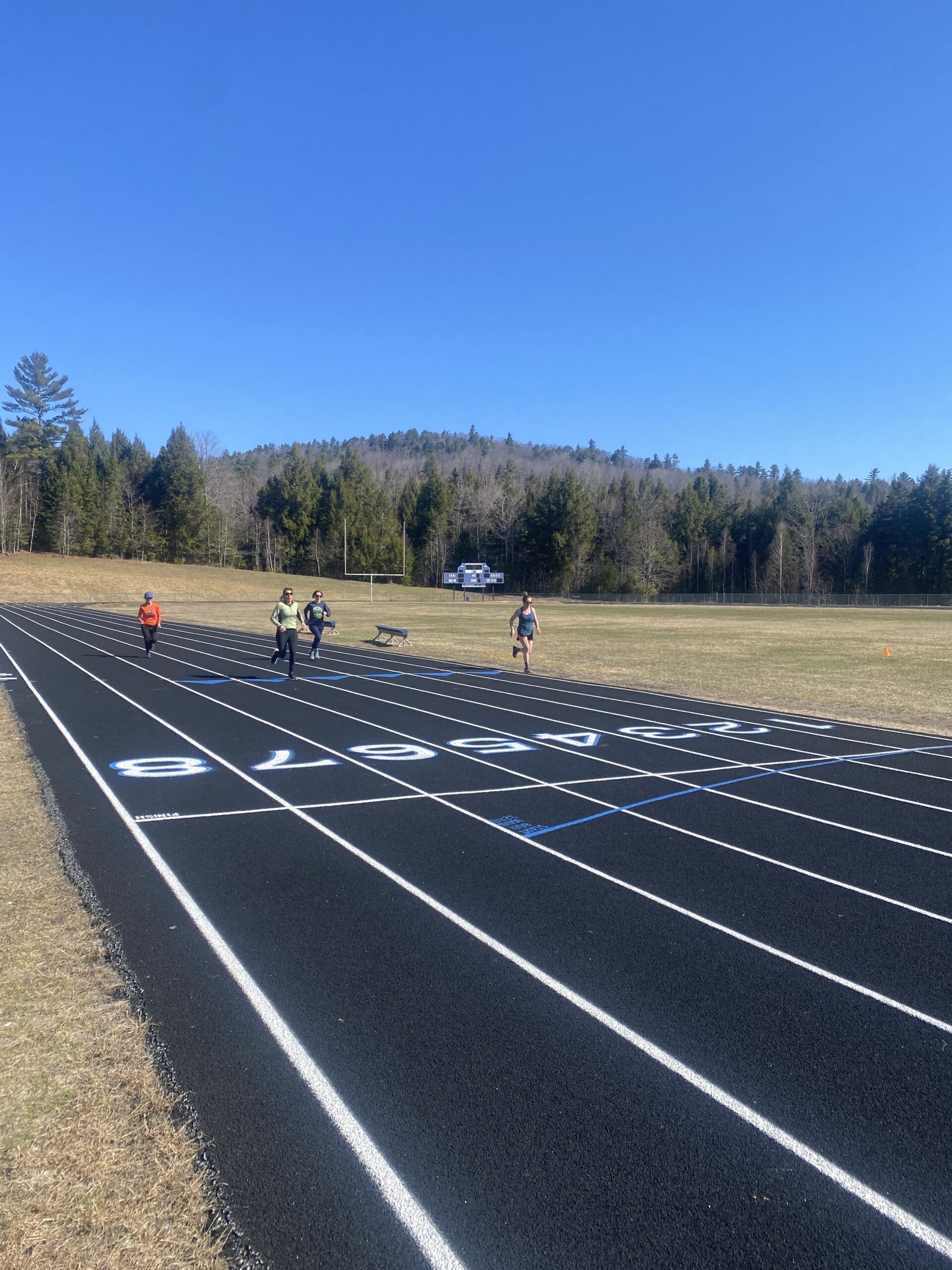
What is the Deal with Foot Strike?
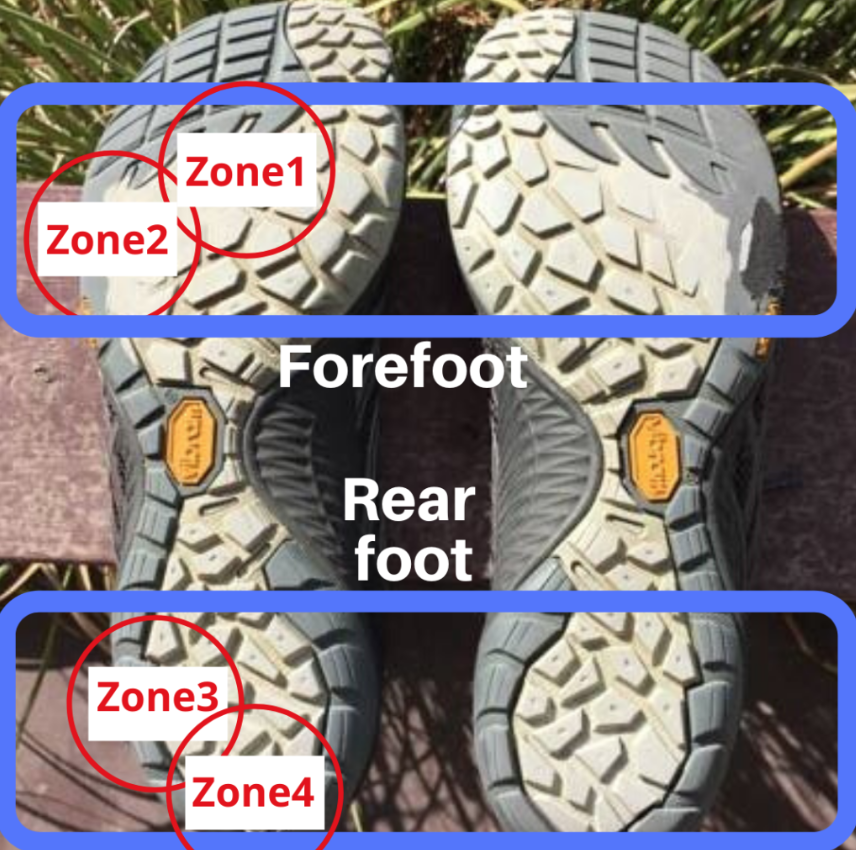
Foot strike refers to what part of your foot you land on when you are running. Are you a heel striker, midfoot striker, or toe striker? If you don’t know, look at the wear pattern on the bottom of your running shoes. If you see considerable wear at the heel, you are likely a heel striker. If the heel tread is intact but there are signs of wear just in front of the heel, you are closer to a midfoot striker. If you don’t see any wear patterns on the back half of your running shoe, you are a toe striker, and your calves are probably killing you!
And Why Does This Matter?
The running world has been captivated by heel strikers. Like, if you heel strike, you are doomed to running hell and will forever be judged by other runners. But the ‘judgers’ have the question all wrong. Turns out, it doesn’t matter if you land on your heel. What actually matters is whether or not your foot is under your center of mass when you land on it. Maybe you’ve heard the term, overstriding? Overstriding is when your foot lands way out in front of your center of mass. Instead of landing beneath you, your foot reaches out in front. Not only is this inefficient, but it can lead to injury.
Toe striking for any duration is also hard on your body, leading to calf and Achilles injuries. Sprinters run on their forefoot. But they aren’t logging long runs on the track with their spikes on. I once ran the last few miles of a half-marathon behind a woman who ran on her toes. It was painful to watch. After the race, I commented that she must have calves of steel. She laughed and said she had read online somewhere that running on your toes was the best running form. Don’t believe everything you read online!
Overstriding
Now that you know heel striking isn’t a bad thing, you probably want to know if you overstride. Simple, get a friend to video you from the side as you run. Have your videographer hold the camera still as you run by rather than following you with the camera. When you watch the video, try to freeze the video to capture the moment when your foot lands on the ground. Is your leg straight and your foot way out in front? Or is your knee bent, and your foot is mostly under your hips when you land on it? Or somewhere in between?

If your knee is bent and your foot is mostly under your hips when you land on it, congratulations! Your work is done here. If your leg is straight-ish and your foot is out in front of you when you land on it, congratulations, you get to work on your running form! One of the best tricks to shorten your stride is increasing your running cadence.
Running Cadence
Your cadence refers to how many steps you take per minute when you are running. 180 steps per minute is the magic number floating around on the internet and touted as the optimal running cadence we should all be striving for. True and not true. We are all built differently and living in our own unique bodies, so 180 steps per minute isn’t necessarily the target we should all be shooting for. However, running cadence is an indicator of running economy – that is, how efficient you are at running – and a cadence below 170 is probably worth working on.
The common method suggested for increasing cadence is using a running cadence app, basically running with a metronome. I don’t know about you, but I find running with a metronome to be excruciatingly tedious, and it takes all the fun out of running. Thankfully, there is another way, and it is FUN. Speed work!
Speed Work to the Rescue!
Now, how should you tackle speed work? I got you.
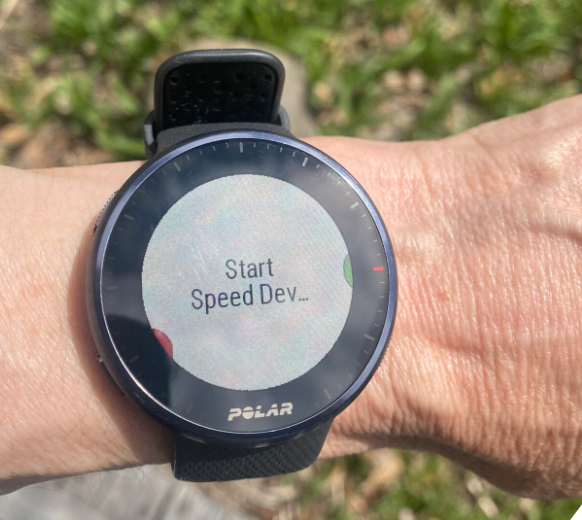
My free course, Speed Development for Runners, can guide you through the process, helping you build the neuromuscular connections necessary to speed up your movements. This fun and rewarding 7-week program is designed to improve neuromuscular coordination, refine running form, and build fitness. The program outlines three running sessions each week. It provides thorough explanations and recommendations, including how to fuel, how to monitor effort, and how to warm up properly before a speed session.
Speed work to increase cadence, speed work to improve running economy, and speed work to refine running form by encouraging you to land with your foot under your center of mass. And you thought this was just about foot strike. Happy running!